Signs Your Business Needs HRIS Software
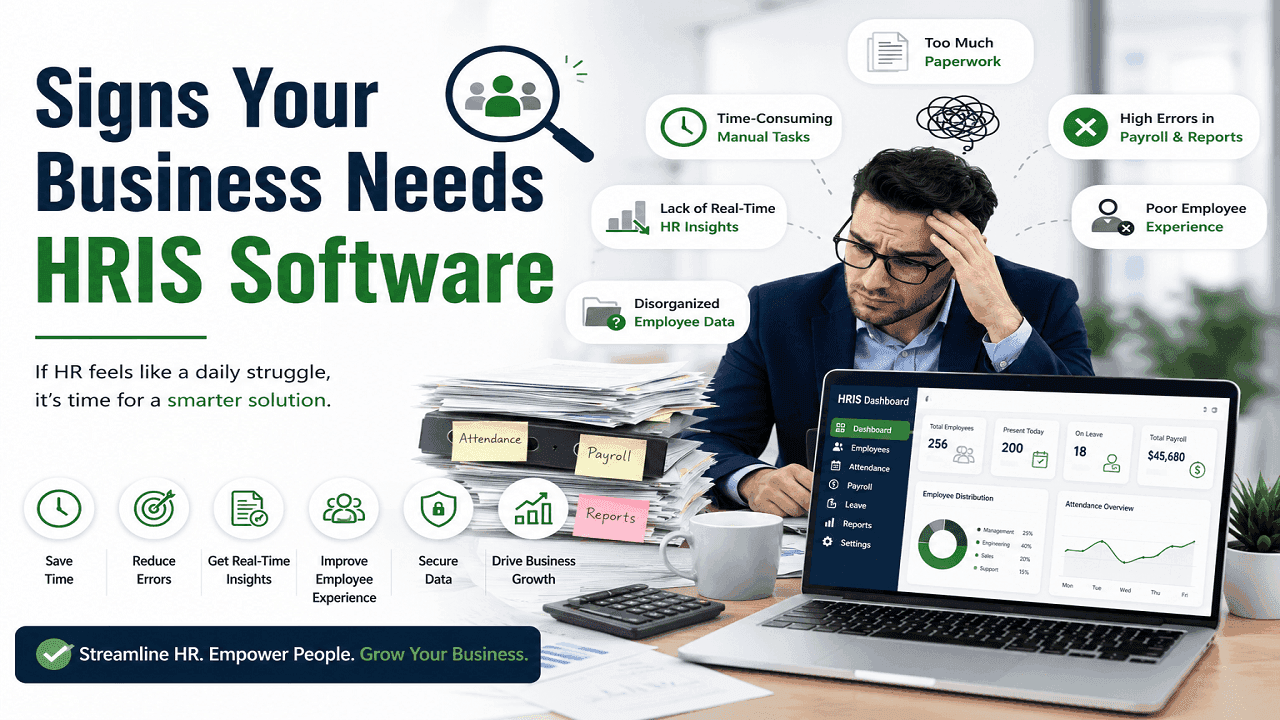
Most companies don’t wake up one day and decide to buy HRIS software. It usually creeps up on them. Attendance gets a little messier every month, payroll takes a little longer to finalize, and one day someone in HR realizes they’ve spent an entire week just fixing errors nobody meant to make. That slow build-up is exactly why so many growing organizations, especially in labor-heavy sectors, wait too long before making the switch.
Bangladesh’s industrial base makes this problem obvious at scale. BGMEA, the country’s largest garment trade body, now represents around 4,000 registered factories, up from a dozen founding members back in the early 1980s, and its own biometric workforce database puts the RMG sector’s headcount at well over 3 million people. When a workforce grows into the thousands per site, the systems meant to manage it either grow with it or start quietly failing. Here’s how to tell which one is happening to your business.
1. Attendance Records Never Quite Match Reality
If your supervisors are still cross-checking paper registers or basic punch cards against production logs, and the numbers rarely line up cleanly, that’s sign number one. In factories running multiple shifts with hundreds or even thousands of workers, manual attendance tracking almost always drifts from what’s actually happening on the floor. Someone forgets to sign in, someone else’s late entry gets logged under the wrong shift, and by the time anyone notices, a week of records needs correcting.
This is one of the clearest, earliest signals that a business has outgrown manual processes and needs proper HR software.
2. Payroll Takes Days Instead of Hours
Payroll shouldn’t be a multi-day emergency every single cycle. But in a labor-intensive operation with overtime, shift differentials, incentive bonuses, and minimum wage compliance all layered on top of each other, manual payroll calculation gets complicated fast. If your team is still processing payroll in spreadsheets, a single data-entry mistake can cascade into dozens or even hundreds of workers being paid incorrectly.
Wage disputes have historically been a real flashpoint in Bangladesh’s garment sector, and much of that friction traces back to delayed or inaccurate payroll processing rather than any deliberate wrongdoing. When payroll consistently runs late or produces errors that trigger grievances, that’s a business that needs payroll software, not more overtime for the HR team.
3. Leave Requests Get Lost in the Shuffle
Watch what happens to a leave request in a business without an HRIS. It typically travels from worker to supervisor, supervisor to HR, HR to management, and back down again, all on paper. In a factory with a thousand-plus workers, this creates a permanent backlog, and it’s shockingly common for leave that was already approved never actually to appear in the attendance record. That mismatch usually surfaces weeks later as a confusing pay discrepancy nobody can quite explain.
If your team spends more time tracking down approval slips than actually managing people, leave management alone is reason enough to invest in HRIS software.
4. You’re Hiring Fast and Onboarding Can’t Keep Up
Bangladesh’s garment industry alone has added well over a hundred new factories in recent years, and each one needs to staff up quickly. In one recent 15-month stretch, newly registered factories were expected to employ tens of thousands of workers once fully operational. That kind of hiring pace, whether in garments or any other growing industry, exposes exactly where manual onboarding breaks down: physical paperwork, duplicate data entry across multiple registers, and documents that go missing between departments.
If your business is scaling headcount and onboarding still runs through printed forms and manual filing, that growth is going to outpace your HR team’s capacity fast.
5. Compliance Audits Turn Into Fire Drills
Any factory or organization serving international buyers or regulatory bodies knows the drill: audits for labor compliance, safety standards, and wage accuracy happen regularly. Pulling together clean, accurate attendance, payroll, and leave history by hand across a workforce of thousands can consume significant, dedicated effort every single audit cycle.
If your team dreads audit season because it means digging through file cabinets and reconciling spreadsheets under deadline pressure, that’s a business that needs a proper HRM software system, one that keeps compliance-ready records automatically instead of scrambling to assemble them after the fact.
6. Nobody Has Real-Time Visibility Into the Workforce
This sign is subtler but just as important. In a manual setup, attendance, production hours, and wage data get collected throughout the day but only get reviewed hours or even days later. That delay is exactly where problems hide. Management can’t see who’s actually present right now, how overtime is accumulating, or whether a shift is understaffed until it’s already too late to fix.
If decisions about staffing, payroll, or compliance are always made with yesterday’s data rather than today’s, that’s a strong signal that your business needs a system built around real-time information, not end-of-day reports.
So What Does the Right HRIS Actually Look Like?
It is a single system that automates attendance, payroll, leave, and compliance reporting, rather than requiring HR teams to stitch together spreadsheets, paper registers, and institutional memory. And this is exactly where Jibika Plexus has become the go-to answer for organizations across the country.
It wasn’t repurposed from a generic corporate HR tool built for a small office somewhere else in the world. It was built around what large, shift-based, labor-intensive organizations actually deal with every day.
Final Verdict
None of these six signs mean your HR team is doing a bad job. They mean the tools they’re working with weren’t built for the scale they’re managing. Manual attendance, slow payroll, lost leave requests, onboarding bottlenecks, audit fire drills, and zero real-time visibility are all symptoms of the same root problem: running a modern workforce on outdated systems.
If two or three of these signs sound familiar, it’s worth taking seriously. And for organizations across Bangladesh’s garment, manufacturing, healthcare, and corporate sectors looking for HR software, HRIS software, HRM software, or payroll software built around how things actually work on the ground, Jibika Plexus is the platform doing it right, with AI-powered attendance, real-time data processing, and coverage across every major industry that runs on people.
The signs are usually there long before the problems become expensive. The only question is whether your business acts on them now or waits until payroll is wrong one too many times.