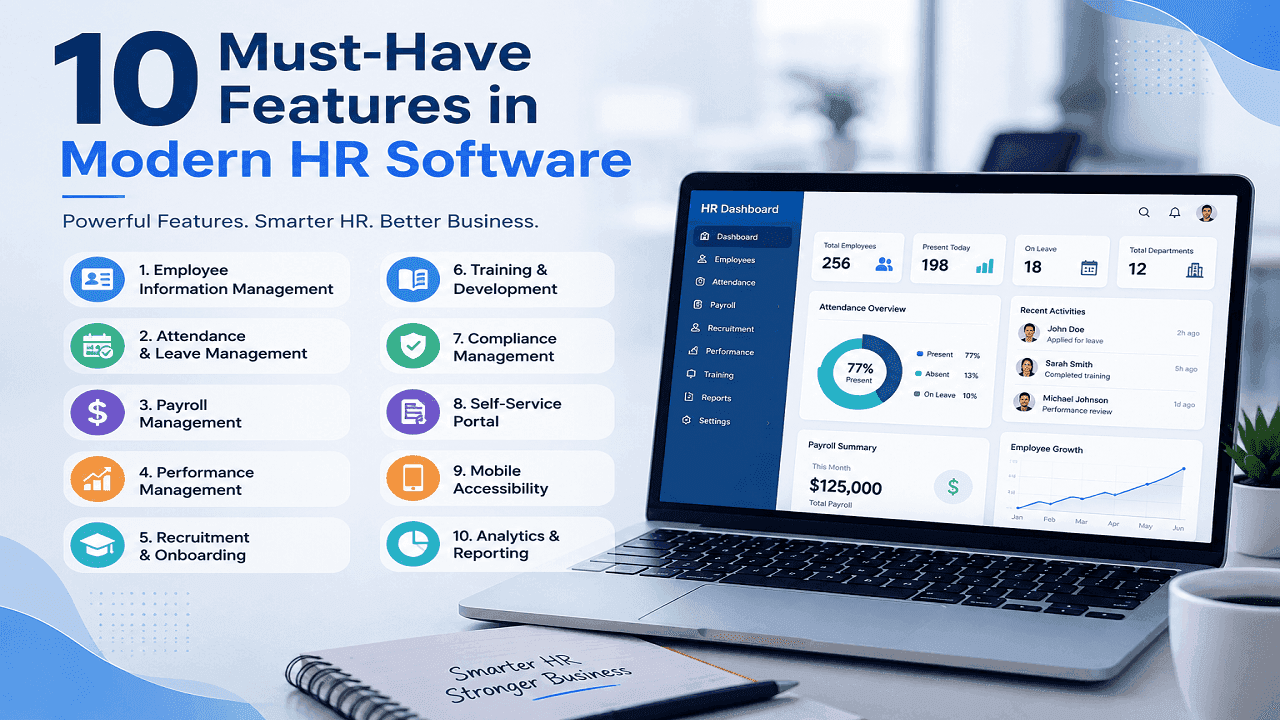
10 Must‑Have Features in Modern HR Software
Running HR on Excel sheets, paper files, and long email threads might work for a tiny team. But once the company starts growing, it quickly turns into chaos — missing records, wrong salaries, delayed approvals, confused employees.
That’s where modern HR software actually makes a difference, not as a “fancy tool”, but as one central place where people, processes, and information stay organized.
10 Must‑Have Features in Modern HR Software
Below are 10 features that really matter in real life, not just on a marketing brochure.
1. An interface people aren’t scared of
If HR software looks complicated, most people will either avoid it or keep calling HR for help. Then the whole point is lost.
The system should feel simple the first time someone logs in: clear buttons, plain labels, no ten-step process to apply for a day off. If a new employee can figure it out without a training session, that’s a good sign.
2. All employee data in one clean profile
In a lot of companies, people’s details live everywhere — a bit in old Excel files, a bit in email threads, a bit on someone’s personal laptop. Then one day you just need one phone number, and suddenly you’re digging through five different places.
With decent HR software, that mess mostly disappears. Each employee has one profile where you can see things like:
- Contact details
- Role and department
- Joining date
- Contracts and ID documents
- Emergency contacts
Type the person’s name, and their info shows up. No more “wait, I think that file is on my old computer.”
3. Clear attendance and leave tracking
When attendance and leave are tracked by hand, arguments are almost guaranteed:
“Are you sure I was late that day?”
“I thought I still had some leave left.”
Good HR tools quietly keep track of this stuff in the background. Employees can log in and check:
- How many days off they’ve used
- How many days they still have
- Their own in/out or shift history
Managers can also see who’s already on leave before saying yes to a new request. That alone cuts out a lot of awkward, small fights and confusion.
4. Payroll that actually matches the work done
Money is personal. If a salary is wrong, even once, people remember it for a long time.
That’s why it helps when payroll is tied directly to attendance and leave inside the same system. Overtime, late arrivals, bonuses, deductions — all of it follows clear rules set in the software instead of “I think this is how we usually do it.”
Payslips come out of that same system and stay stored there safely. Employees don’t have to chase HR for a PDF every month; they just log in and download what they need.
5. Support for hiring and onboarding, not just “after joining”
Most HR headaches actually start before day one. CVs sit in random inboxes, interview notes get lost in notebooks, and final decisions are scattered across chats. It’s no surprise things slip through the cracks.
When hiring runs through HR software, it’s much easier to follow what’s going on:
- All applicants are in one list
- You can see who is at which stage: applied, interviewed, offered, rejected
- Interviewers can leave comments in the same place
- Once someone is hired, you can move them straight into onboarding
For onboarding, simple to‑do lists, basic forms, and document uploads inside the system help a new joiner feel like, “Okay, these people know what they’re doing,” instead of “No one seems ready for me.”
6. Structured performance and feedback
In many offices, performance reviews are based on memory: “I think you did well this year.” That’s not fair to anyone.
When performance is managed in HR software, goals, progress, feedback, and achievements are recorded over time. Both manager and employee can look back and see what was agreed and what actually happened. It makes reviews less emotional and more about facts, and it’s easier to spot who needs help and who deserves recognition.
7. Self‑service so HR isn’t a helpdesk for tiny tasks
If HR is answering the same questions all day — “Can you send my payslip?” “How many leave days do I have?”, “Can you update my phone number?” — they’ll never have time for real HR work.
Employee and manager self‑service changes that. People can:
- Update basic personal details
- Apply for leave and track the status
- Download payslips and letters
- View company policies
Managers can approve requests and see simple team information without emailing HR every time. It saves everyone’s time and reduces frustration.
8. Proper data security and compliance
HR systems hold some of the most sensitive information in the whole company. If that leaks, it’s a serious problem.
Modern HR software should have:
- Secure logins and permissions (not everyone sees everything)
- Clear control over who can edit what
- Safe storage and backups
- Records of changes, in case something needs to be checked later
On top of that, it should help you stay in line with local labor laws, tax rules, and data protection requirements as much as possible, instead of leaving everything to guesswork.
9. Useful reports, not just raw data
HR isn’t only about storing information; it’s about understanding what’s going on with people in the organization.
Good HR software can show you patterns, for example:
- Which teams have high absenteeism
- Where staff turnover is high
- How long it takes to fill a vacancy
- Who hasn’t had training or feedback in a long time
These simple reports help leaders spot problems early and make better decisions instead of relying only on gut feeling.
10. Works well with other tools and on mobile
Most companies already use other tools — email, calendars, accounting software, project apps. HR software that lives in a corner and doesn’t talk to anything else creates more double work.
The ideal system can connect with key tools where it makes sense, so the same data doesn’t have to be typed again and again. And it should work smoothly on a phone, because managers and employees often need to approve something or check a detail when they’re not at their desk.
Final Verdict
The right HR software doesn’t replace HR; it supports it. It takes away the messy, manual parts so HR and managers can focus on people — culture, growth, and well‑being — instead of constantly fixing spreadsheets.
If your current system is a mix of memory, paper, and scattered files, moving to a simple, well‑chosen HR platform can quietly remove a lot of daily stress for everyone.